
Your dedicated VIP companion from your first conversation to your return home.
We advise you personally, choose your clinic and doctor together and organise your journey step by step. We fly with you, accompany your VIP transfer, hotel and medical appointments, interpret for you and remain available after you return home.
Your options at a glance
When choosing a clinic for sleeve gastrectomy, it is important to have a high quality of overall care: appropriate indication testing, medical experience, clinical emergency structures and planned follow-up care. The return home should not only be prepared organizationally, but also explicitly medically.
Detailed information
Treatment information
01Overview & essentials
Bleeding:
Bleeding:
Although rare, bleeding in the stomach area can occur.
Nutritional Deficiencies:
Nutritional Deficiencies:
Since a large portion of the stomach is removed, the absorption of some nutrients, especially vitamin B12, iron, and calcium, may be reduced. Lifelong supplementation is often necessary.
02Methods & procedure
Gastric sleeve surgery Istanbul
Gastric sleeve surgery Istanbul
What is a sleeve gastrectomy?
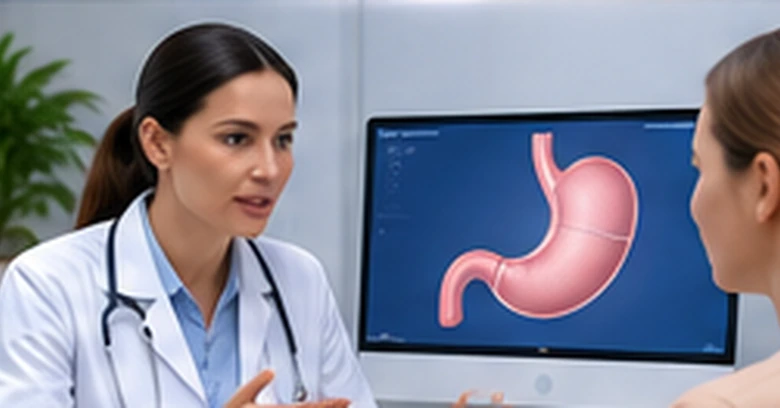
Sleeve gastrectomy is one of the most frequently performed bariatric surgical procedures for treating obesity. In this operation, the stomach is significantly reduced in size and reshaped into a narrow tube. This reduces the stomach's volume and helps patients feel full with less food, leading to weight loss. This surgery is generally recommended when diet and exercise alone are insufficient to achieve significant weight loss.
Sleeve gastrectomy is usually performed laparoscopically, through small incisions. During the procedure, most of the stomach is removed, leaving a tubular structure that is about 10-15% of the original stomach. This procedure reduces the stomach's ability to hold large amounts of food, resulting in patients consuming fewer calories.
The operation is performed under general anesthesia and usually lasts 1-2 hours.
The operation is performed under general anesthesia and usually lasts 1-2 hours. The laparoscopic method speeds up the healing process and leaves smaller scars.
Sleeve gastrectomy is a surgical procedure for weight loss and is generally recommended for severely obese individuals. Typical candidates for this surgery include:
People with a body mass index (BMI) of 40 or higher.
Individuals with a BMI between 35 and 39.9 who have health problems related to obesity (such as diabetes, high blood pressure or sleep apnea).
Weight loss:
Weight loss:
Patients typically lose 50-70% of their excess weight within the first year after surgery.
Improvement of health problems:
Improvement of health problems:
Health problems associated with obesity, such as type 2 diabetes, high blood pressure, and sleep apnea, often improve or even disappear after surgery.
More topics (1)
03Suitability, preparation & safety
Risk of Infection:
Risk of Infection:
There is a risk of infection after the operation, but this can usually be treated with antibiotics.
Leakage:
Leakage:
There is a risk that the sutures may fail and stomach contents may leak into the abdominal cavity.
Sleeve gastrectomy is an effective surgical method for weight loss…
Sleeve gastrectomy is an effective surgical method for weight loss and can lead to significant long-term weight loss in suitable patients. However, it is not a quick fix; patients must change their lifestyle, eat a balanced diet, and exercise regularly. To achieve the best results, patients must follow their doctors' instructions both before and after the surgery.
Sleeve gastrectomy not only helps with weight loss but can also improve obesity-related health problems. However, like any surgery, it carries risks and should only be considered for suitable candidates.
04Aftercare & results
Individuals for whom diet, exercise, and medication have not resulted in sustainable weight loss.
Individuals for whom diet, exercise, and medication have not resulted in sustainable weight loss.
Individuals who are in good health and over 18 years of age.
Faster Recovery Time:
Faster Recovery Time:
The laparoscopic method causes less postoperative pain and results in shorter hospital stays compared to open surgery.
Reflux:
Reflux:
The surgery can increase the risk of gastroesophageal reflux disease (GERD) because the stomach is altered.
The recovery process after sleeve gastrectomy can vary from person to person. For the first few days, only liquids and pureed foods are permitted. Gradually, patients can resume eating solid foods. After the surgery, patients must maintain healthy eating habits and engage in regular physical activity for life. They should also take vitamin and mineral supplements regularly to prevent deficiencies.
Aftercare is crucial. Patients should see their doctor regularly after the surgery to ensure that no complications arise. Psychological support can also be helpful, as it helps patients stay motivated throughout the entire process.
05More questions
Improved Quality of Life:
Improved Quality of Life:
With weight loss, patients feel more energetic, can exercise more easily, and experience an overall improvement in their health.